Umbilical Hernia
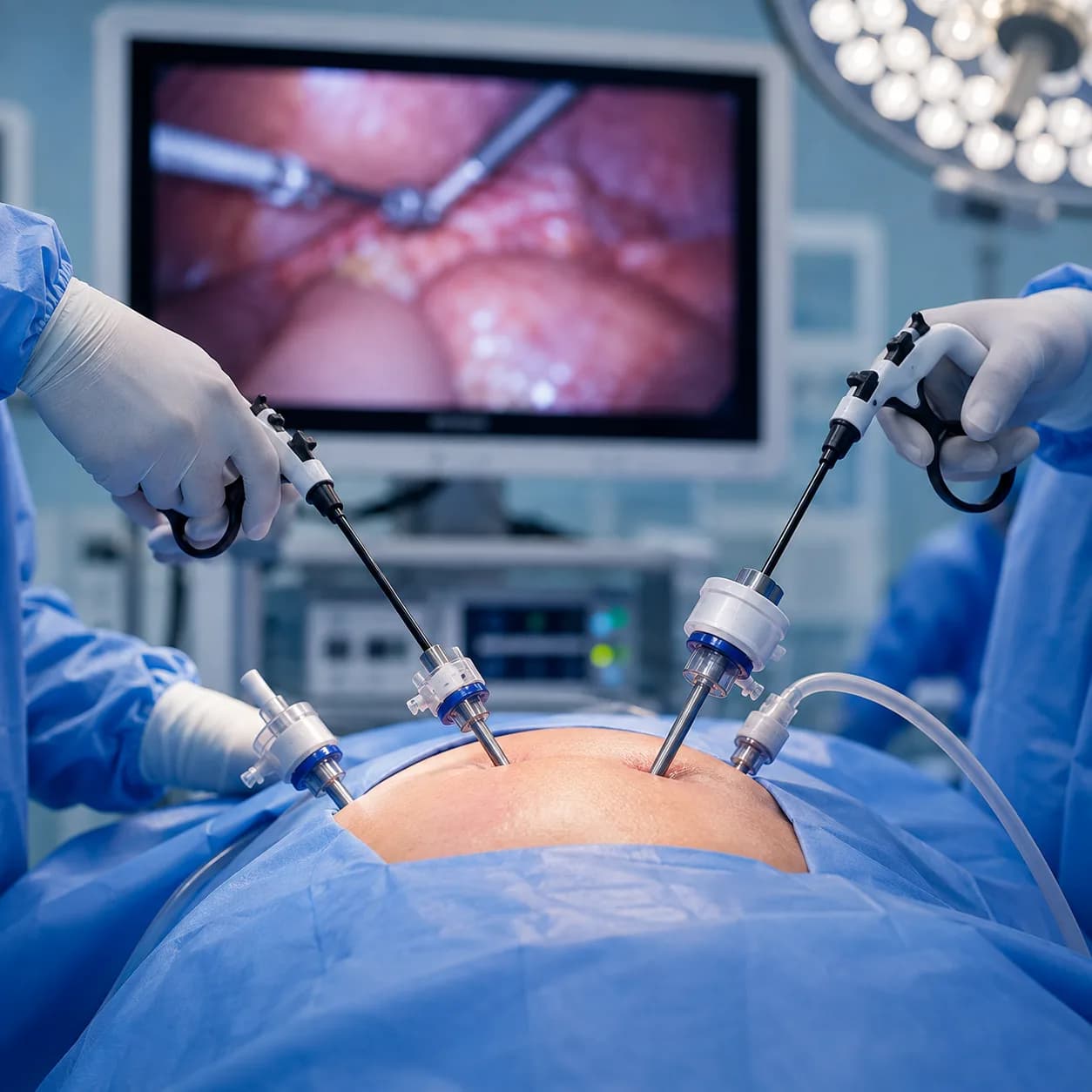
Repair of Umbilical Hernias using Open or Laparoscopic techniques, with mesh reinforcement when clinically appropriate.
Key benefits
Open & laparoscopic options
Mesh reinforcement when appropriate
Small and larger hernia repair
Day-care possible in selected cases
Overview
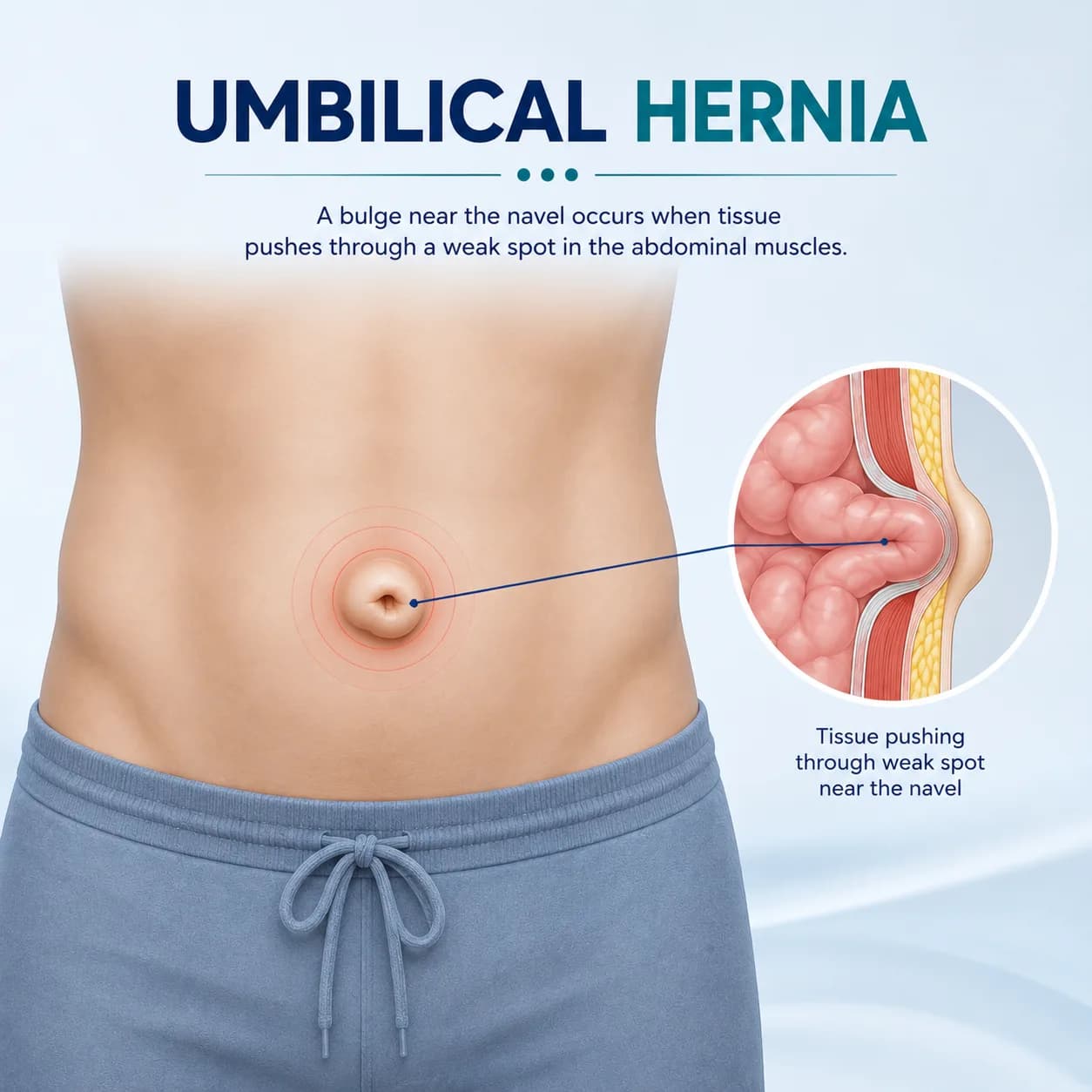
An Umbilical hernia occurs when tissue or part of the intestine pushes through a weakness in the abdominal wall at or around the belly button. It may appear as a small swelling that becomes more noticeable when standing, coughing, lifting or straining.
Dr. Jay Pitroda provides surgical treatment for umbilical hernias using Open and Laparoscopic approaches. Depending on the size of the defect, symptoms, abdominal-wall condition and individual patient factors, repair may involve sutures or mesh reinforcement.
The aim of surgery is to repair the abdominal-wall defect, restore its strength and provide a safe and durable recovery.
What to expect
Your evaluation begins with a detailed consultation and physical examination to assess the size and location of the umbilical hernia. Ultrasound or other imaging may be recommended when the diagnosis or extent of the hernia needs further assessment.
Dr. Jay Pitroda will explain whether observation or surgery is appropriate and, when surgery is advised, discuss the available repair options, expected recovery, risks and follow-up. The technique is selected according to the individual hernia rather than using the same approach for every patient.
Recovery
Recovery after umbilical hernia repair varies depending on the size of the hernia, the repair technique and your overall health. Many patients can begin walking soon after surgery and gradually return to routine activities as advised.
You will receive clear post-operative instructions regarding wound care, pain medicines, activity, lifting restrictions and follow-up. Your recovery plan will be tailored to the procedure performed and your progress.
Common questions
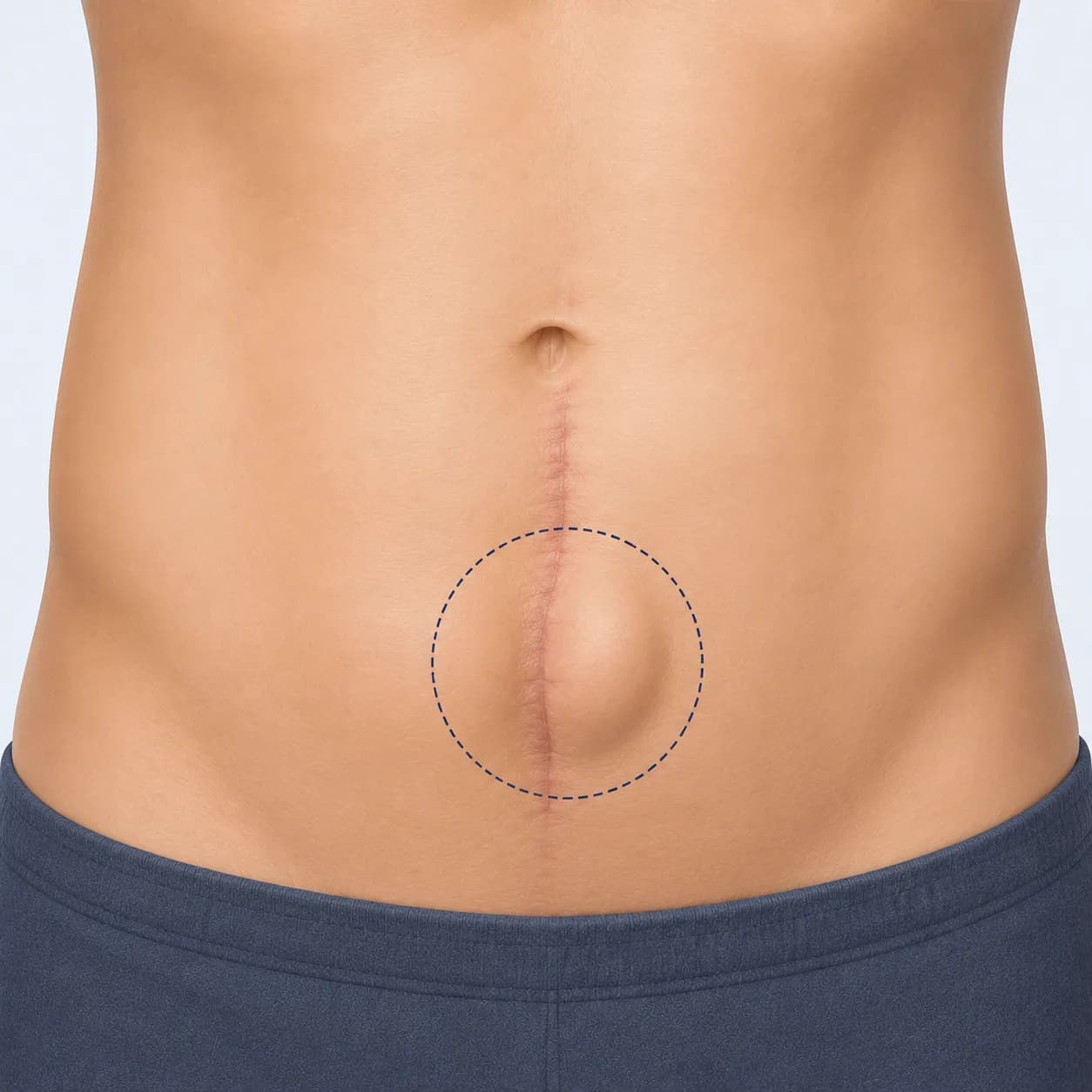
It commonly appears as a swelling or bulge at or near the belly button. The swelling may become more noticeable when standing, coughing or straining.
Some umbilical hernias cause no symptoms. Others may cause discomfort, pressure, pain or an increase in the size of the swelling, particularly with physical activity.
Not every umbilical hernia requires immediate surgery. The decision depends on symptoms, the size and characteristics of the hernia, and the patient's overall clinical situation.
Painful or enlarging hernias should be evaluated by a surgeon. The recommended treatment depends on the clinical findings and characteristics of the hernia. And most of them require surgical treatment.
Mesh is commonly used for many adult umbilical hernia repairs, particularly when reinforcement of the abdominal wall is appropriate. The choice depends on the size and characteristics of the defect and the individual patient.
Either of the approaches may be used. The appropriate technique depends on the size and location of the hernia, previous operations, abdominal-wall condition and patient factors.
Recovery varies from patient to patient. Light activity can often be resumed relatively early, while heavier lifting and strenuous exercise may need to be restricted for a longer period according to the surgeon's advice.
A suddenly painful or tender swelling, particularly when it cannot be pushed back, especially when accompanied by vomiting, abdominal distension or difficulty passing stool or gas, requires urgent medical assessment.
Considering this procedure?
Book a consultation with Dr. Pitroda to discuss whether it's right for you.