Perianal Fistula
Evaluation and treatment of perianal fistula, including fistulotomy and sphincter-preserving procedures for appropriately selected patients.
Key benefits
Detailed fistula assessment
Surgical and sphincter-preserving options
Treatment of recurrent fistula
Individualised surgical planning
Laser treatment
Overview
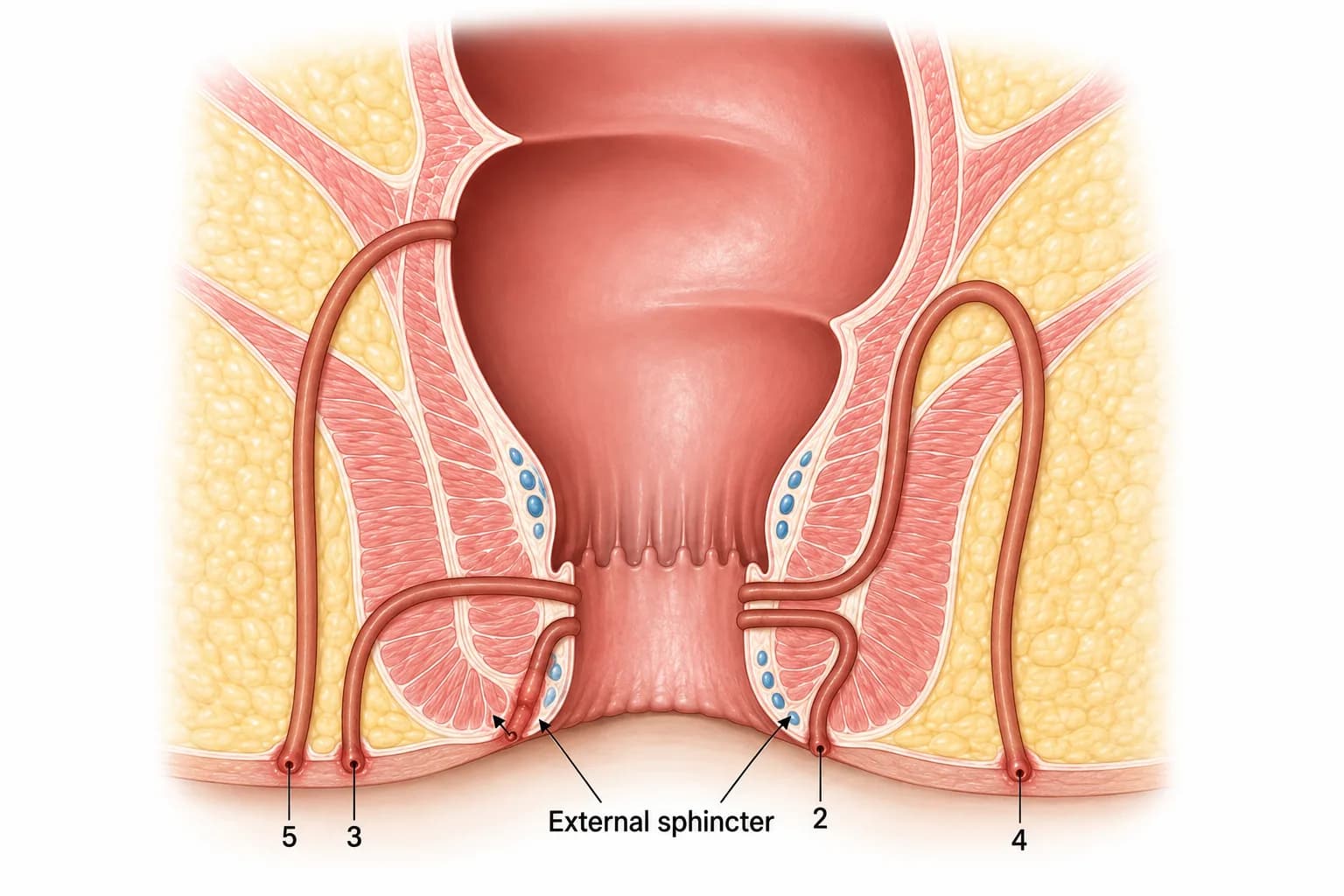
A perianal fistula, also called an anal fistula or fistula-in-ano, is an abnormal tunnel that develops between the inside of the anal canal or rectum and the skin around the anus. It commonly develops following an anal abscess, when an abnormal tract persists after the infection has drained.
Patients may experience recurrent swelling, pain, pus or fluid discharge from a small opening near the anus. Symptoms can improve temporarily after an abscess drains but may return when the fistula remains.
Dr. Jay Pitroda provides evaluation and surgical treatment of perianal fistula, with the treatment approach selected according to the location and course of the fistula, its relationship with the anal sphincter, previous procedures and individual patient factors.
The goal is to eradicate the fistula while preserving normal sphincter function wherever possible.
What to expect
Your consultation begins with a detailed discussion of previous abscesses, pain, discharge, swelling and any previous fistula treatment. A clinical examination is performed to identify the external opening and assess the likely course of the fistula.
For complex, recurrent or high fistulas, additional evaluation such as MRI may be recommended to map the fistula tract and its relationship with the anal sphincter before treatment.
Dr. Jay Pitroda will explain the appropriate treatment options, including their benefits, limitations, risks and expected recovery, before surgery.
Recovery
Recovery after fistula treatment varies according to the complexity of the fistula and the procedure performed. Some patients can return home the same day, while more complex procedures may require a longer period of monitoring and recovery.
You will receive instructions regarding wound care, hygiene, bowel habits, medicines, activity and follow-up. Regular follow-up is important to assess healing and identify any persistent or recurrent disease.
Common questions
Many anal fistulas develop after an abscess around the anus. After the abscess drains, an abnormal tract may persist and continue to cause discharge or recurrent infection.
Common symptoms include recurrent swelling, pain, pus or fluid discharge, irritation around the anus and a small external opening in the skin.
A fistula generally does not reliably heal without definitive treatment because the abnormal tract may persist even after temporary improvement in symptoms.
No. Fistulas can differ in their location, complexity and relationship with the anal sphincter. These factors are important when deciding treatment.
Diagnosis usually begins with clinical examination. MRI or other imaging may be recommended for complex, recurrent or deeper fistulas to define the tract and guide treatment.
Fistulotomy is a surgical procedure in which the fistula tract is opened along its length so that it can heal from the inside out. It is generally considered when the tract involves a minimal amount of sphincter muscle that can be safely sacrificed.
For fistulas where cutting through significant sphincter muscle would carry an unacceptable risk to continence, procedures designed to preserve the sphincter may be considered.
A seton is a surgical thread placed through a fistula tract in selected cases to maintain drainage or manage the fistula while protecting the sphincter. Its use depends on the fistula's anatomy and treatment plan.
LIFT, or ligation of the intersphincteric fistula tract, is a sphincter-preserving surgical technique that may be considered for selected fistulas involving the sphincter.
Yes. Recurrence can occur, particularly with complex or recurrent fistulas. The risk depends on the fistula anatomy, treatment method and individual factors.
Recovery depends on the fistula and procedure performed. Simple fistula procedures may heal relatively quickly, while complex or sphincter-preserving procedures may require longer follow-up.
Severe or increasing anal pain, fever, rapidly increasing swelling, difficulty sitting or passing stool, or feeling significantly unwell can indicate an abscess or other infection and requires prompt medical assessment.
Considering this procedure?
Book a consultation with Dr. Pitroda to discuss whether it's right for you.