Anal Fissure
Diagnosis and treatment of acute and chronic anal fissure, with personalized medical, procedural and surgical treatment options.
Key benefits
Personalised proctology evaluation
Non-surgical treatment options
Treatment for chronic fissure
Surgical options when appropriate
Overview
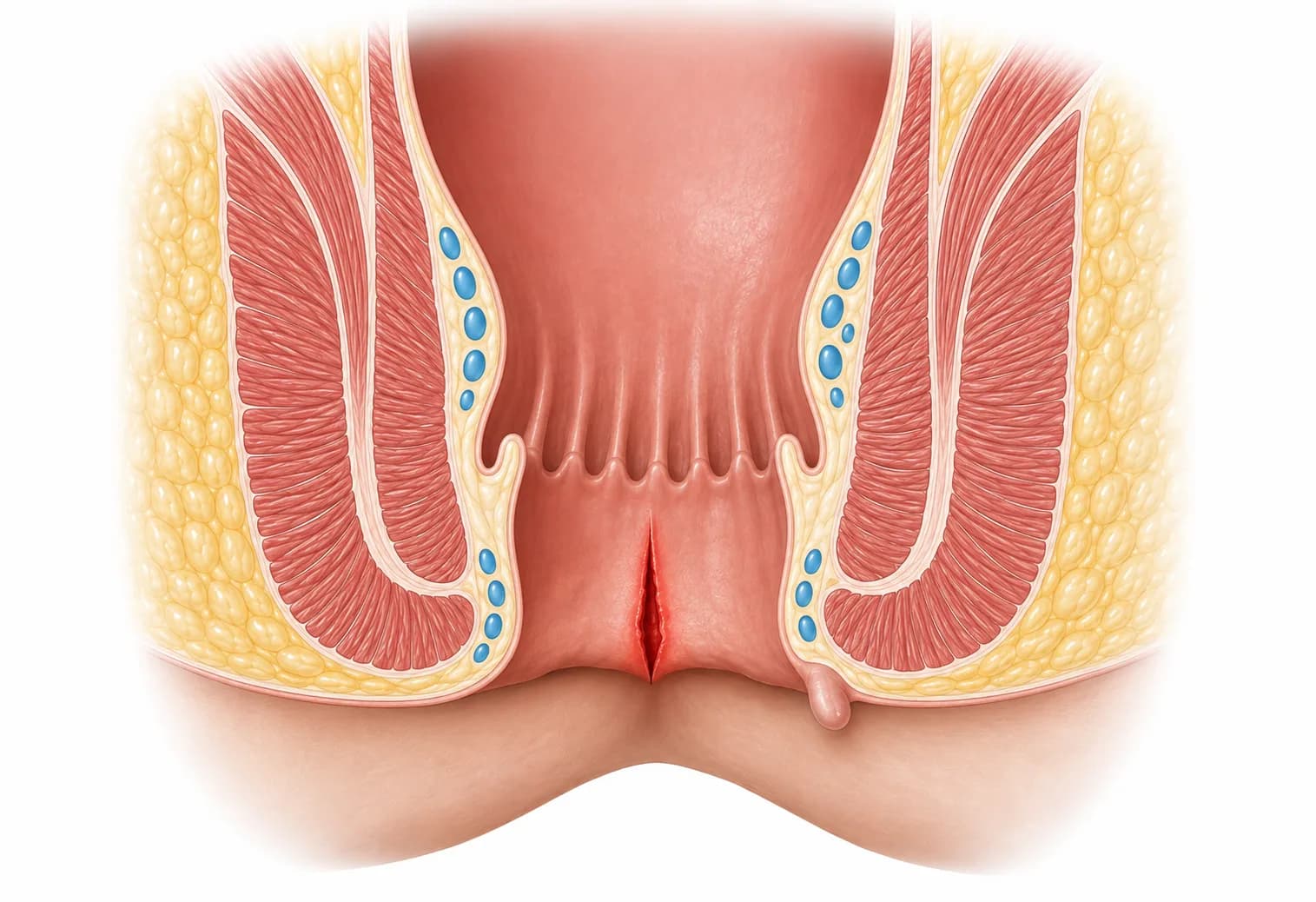
An Anal fissure is a small tear in the lining of the anal canal. It commonly causes sharp or burning pain during bowel movements, which may continue for some time afterwards. Bright-red bleeding may also occur. Constipation, hard stools and repeated irritation are common triggers, although diarrhea and other conditions can also contribute.
Dr. Jay Pitroda provides evaluation and treatment of both acute and chronic anal fissures. Treatment is selected according to the duration and severity of symptoms, examination findings and individual patient factors.
Management may include dietary and bowel-habit changes, fibre and stool-softening measures, topical medicines, or Surgery when appropriate.
The aim is to relieve pain, allow the fissure to heal and address the factors contributing to recurrence.
What to expect
Your consultation begins with a detailed discussion of your pain, bowel habits, bleeding and previous treatment. A gentle clinical examination is used to assess the fissure and determine whether it appears acute or chronic. When pain is severe, examination may be modified or performed under appropriate anesthesia when necessary.
Dr. Jay Pitroda will explain the treatment options and discuss which approach is appropriate for your condition. Persistent or atypical fissures may require further evaluation because fissures outside the usual midline locations or multiple fissures can sometimes be associated with other underlying conditions.
Recovery
Recovery depends on whether the fissure is treated with medical therapy, an office-based procedure or surgery. Many acute fissures improve with non-operative treatment, while chronic fissures that do not respond to medical therapy may require further intervention.
You will receive guidance on fibre and fluid intake, bowel habits, medicines, hygiene, activity and follow-up. Recovery and symptom improvement vary from patient to patient and according to the treatment performed.
Common questions
Typical symptoms include sharp or tearing pain during bowel movements, pain that may continue afterwards, and bright-red bleeding.
Constipation and passage of hard stools are common triggers. Diarrhoea and repeated irritation can also contribute.
An acute fissure is a more recent tear that may heal with conservative treatment. A fissure that persists or develops chronic features may require additional medical or surgical treatment.
Yes. But not for every patient. Non-operative treatment is generally used first for acute anal fissures and may include fiber, stool-bulking measures, sitz baths and appropriate topical treatment.
Depending on the condition, treatment may include stool-softening or fiber measures and topical medicines designed to reduce sphincter spasm and support healing. Topical calcium-channel blockers are recommended as an effective first-line option in chronic fissure management, with a favorable side-effect profile compared with topical nitrates.
Surgery may be considered for chronic fissures that do not respond adequately to medical treatment or in selected patients with persistent symptoms. Tailored lateral internal sphincterotomy is an established surgical option for appropriate patients.
Lateral internal sphincterotomy is a surgical procedure that divides a tailored portion of the internal anal sphincter to reduce spasm and allow the fissure to heal. The procedure is selected carefully because continence-related risks must be considered.
Yes. Recurrence can occur, particularly when constipation, diarrhoea or other contributing bowel problems persist.
No. Although constipation and hard stools are common triggers, fissures can also occur with diarrhoea and other conditions. Atypical fissures require appropriate evaluation.
Rectal bleeding should not automatically be attributed to a fissure. Other conditions can also cause bleeding, so persistent or unexplained bleeding should be evaluated appropriately.
Considering this procedure?
Book a consultation with Dr. Pitroda to discuss whether it's right for you.