Nail Infection & Nail Removal
Evaluation and treatment of infected, ingrown and damaged nails, including partial or complete nail removal when clinically appropriate.
Key benefits
Detailed nail assessment
Treatment of infected & ingrown nails
Partial or complete nail removal when required
Local anaesthesia & day-care treatment
Overview
Nail problems can occur because of ingrown nails, bacterial or fungal infection, repeated trauma, poorly fitting footwear or other conditions affecting the nail and surrounding skin. Symptoms may include pain, swelling, redness, discharge, thickening, discoloration or separation of the nail from the nail bed.
Dr. Jay Pitroda provides evaluation and treatment of infected and problematic fingernails and toenails, including ingrown nails, nail-fold infections and selected severely damaged or infected nails.
Treatment depends on the underlying cause. It may include local wound care, medicines, drainage of an abscess, treatment of the ingrown portion of the nail, or partial/complete nail removal when required
Conditions We Treat
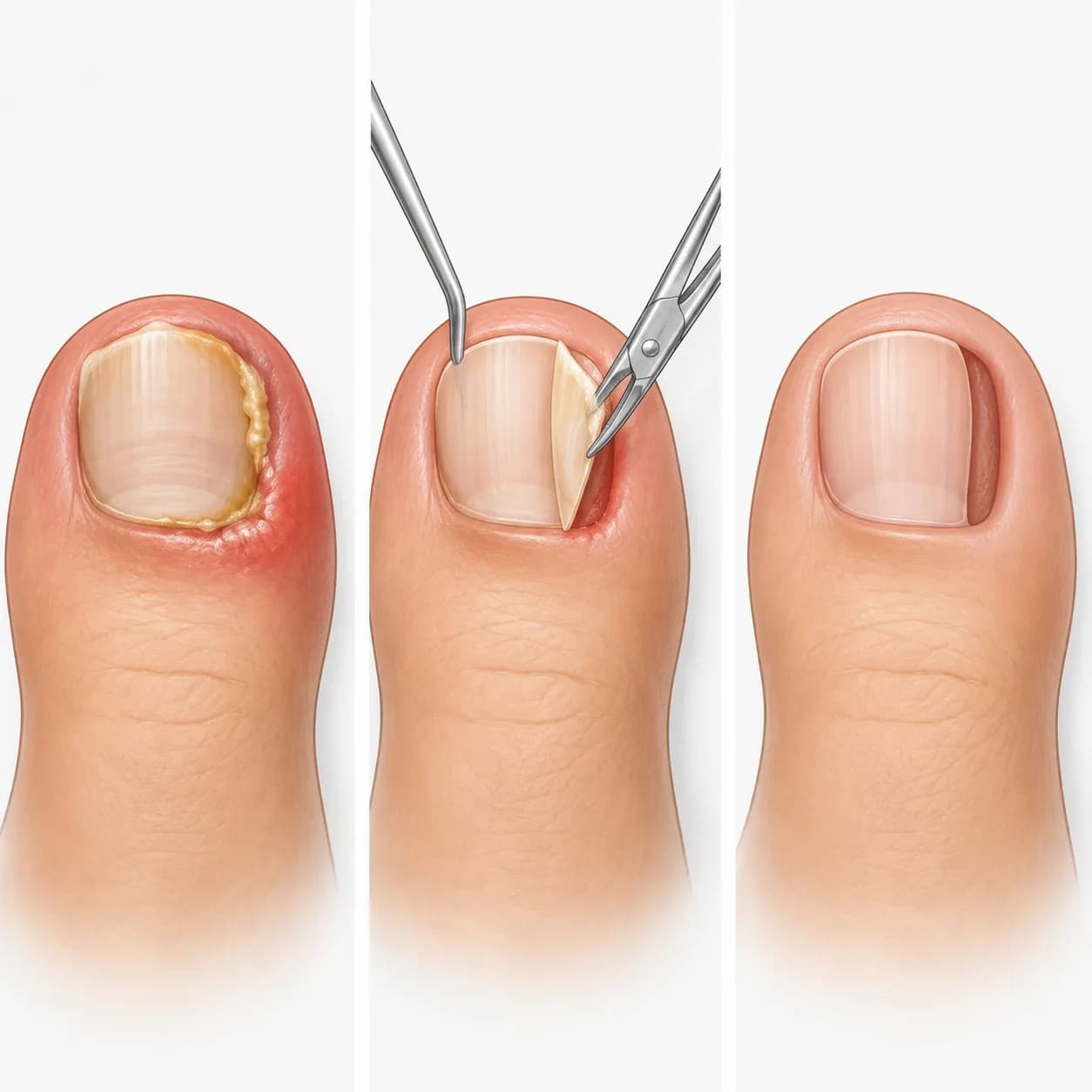
Ingrown toenail
A nail edge grows into the surrounding skin, commonly causing pain, swelling and sometimes infection.
Nail-fold infection
Also called paronychia, this causes inflammation around the nail and may form an abscess requiring drainage.
Infected/ Damaged nail
Assessment of nails affected by trauma, secondary infection or significant inflammation.
Fungal nail infection
Thickened, brittle or discolored nails may be caused by fungal infection and may require medical or antifungal treatment; nail removal is reserved for selected severe cases.
Recurrent ingrown toenail
Repeated episodes may require removal of the problematic portion of the nail and, when appropriate, treatment aimed at reducing recurrence.
Nail abscess
A collection of pus around the nail may require drainage rather than medicines alone.
What to expect
Your consultation begins with an examination of the nail, surrounding skin and affected finger or toe. The cause of the problem is assessed, including whether there is an ingrown nail, infection, abscess or significant nail damage.
For fungal or unclear nail disorders, additional testing or a nail sample may sometimes be recommended before starting prolonged antifungal treatment.
If nail removal or drainage is required, the procedure can commonly be performed under local anesthesia. Dr. Jay Pitroda will explain whether partial or complete nail removal is appropriate and provide instructions for wound care and follow-up.
Treatment Depends on the Cause
Conservative Treatment
Mild nail problems may improve with appropriate local care, protection of the area, suitable footwear and treatment directed at the underlying cause.
Infection Treatment
Depending on the type and severity of infection, treatment may include topical or oral medicines. When an abscess is present, drainage may be required.
Partial Nail Removal
For selected ingrown nails, the affected edge or portion of the nail can be removed while preserving the rest of the nail.
Complete Nail Removal
Complete nail removal may be considered when the entire nail is severely damaged, chronically infected or otherwise requires removal. The decision depends on the underlying condition.
Recovery
Recovery depends on the condition treated and whether part or all of the nail was removed. Some minor procedures can be performed as day-care treatment under local anesthesia.
After the procedure, mild soreness, swelling or tenderness can occur. You will receive instructions regarding dressing changes, wound care, footwear, activity and follow-up.
A removed toenail or fingernail grows back gradually, although the time required depends on which nail is affected and whether the nail bed or growth area has also been treated.
Common questions
An ingrown toenail occurs when the edge of the nail grows into the surrounding skin, commonly affecting the big toe. It can cause pain, redness, swelling and sometimes infection.
No. Mild cases may improve with conservative measures. More severe or persistent cases may require treatment by a clinician, including removal of the affected portion of the nail.
Paronychia is inflammation of the tissue surrounding a fingernail or toenail. Acute cases can be associated with infection and abscess formation.
When an abscess is present, drainage is generally required to release the collection. Antibiotics alone may not be sufficient.
Partial nail removal involves removing the problematic edge or portion of the nail while leaving the unaffected portion in place.
Complete nail removal may be considered for selected severely damaged, infected or otherwise problematic nails. Some severe fungal nail infections may also occasionally require nail removal.
The procedure is performed under appropriate local anaesthesia to minimise pain during the procedure. Some soreness can occur after the anesthetic wears off.
Many minor nail procedures can be performed as day-care treatment under local anesthesia, depending on the condition and individual patient.
Nails grow slowly, and the time required for complete regrowth varies between fingernails and toenails and according to the extent of treatment.
Yes. Recurrence can occur. The risk depends on factors such as nail shape, footwear, nail-cutting habits and whether the nail's growth area is also treated.
Significant pain, increasing redness or swelling, pus, spreading infection, fever or difficulty walking should be assessed. People with diabetes and those with weakened immunity should seek medical advice promptly for foot or nail problems.
Considering this procedure?
Book a consultation with Dr. Pitroda to discuss whether it's right for you.