Lipoma, Cyst & Skin Lump Removal
Evaluation and removal of lipomas, cysts and other superficial skin and soft-tissue lumps, with personalized treatment based on the diagnosis and clinical findings.
Key benefits
Detailed clinical assessment
Lipoma & cyst removal
Day-care procedures when appropriate
Overview
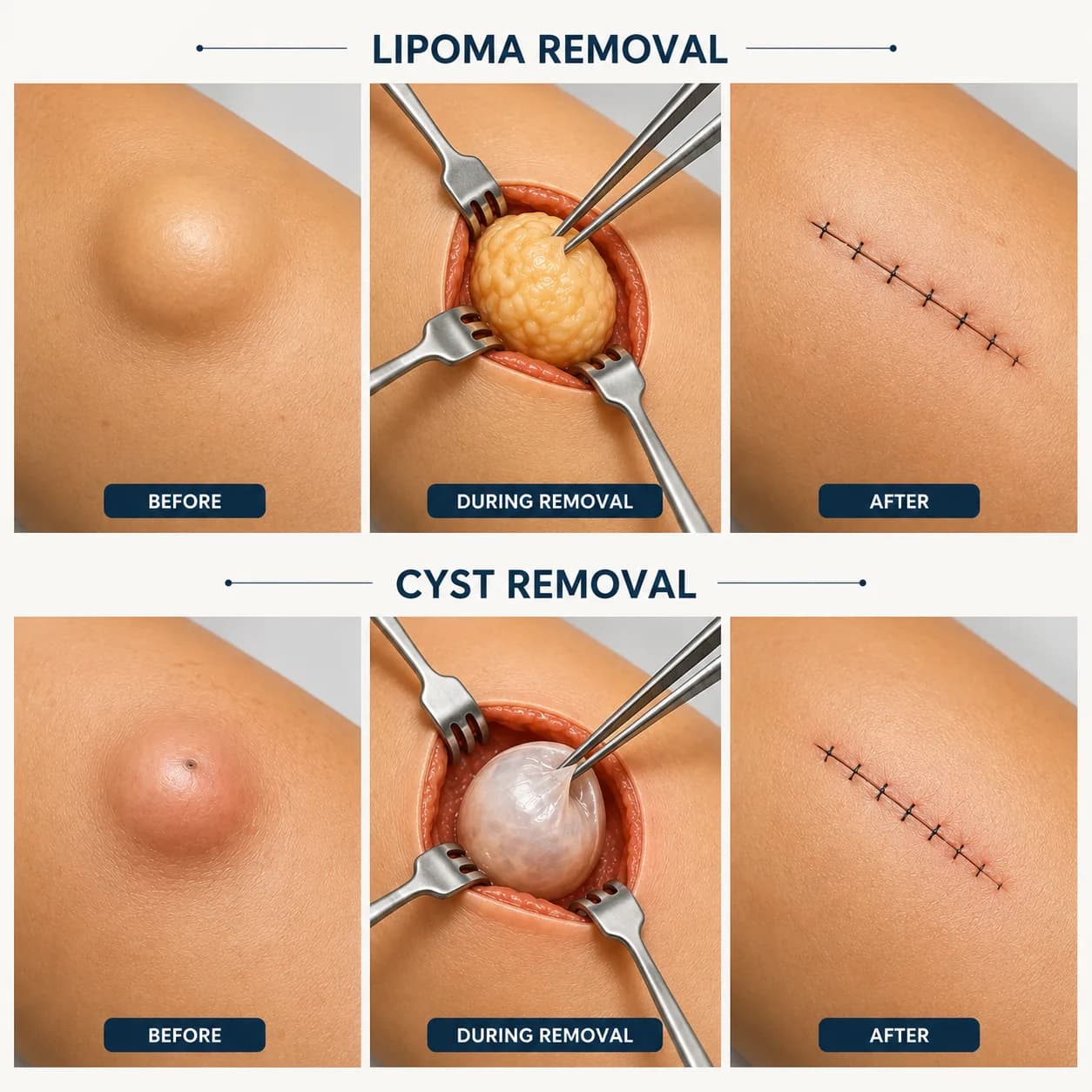
Lumps beneath or within the skin are common and can have a variety of causes. A soft, mobile lump may be a lipoma, while a rounded swelling arising from the skin can be an epidermoid cyst. Other benign skin and soft-tissue conditions can produce similar-looking swellings.
Dr. Jay Pitroda provides evaluation and surgical removal of lipomas, cysts and selected other superficial skin and soft-tissue lumps. Treatment is planned according to the size, location, symptoms, duration and clinical characteristics of the lesion.
Some lumps may simply require observation, while others may need imaging, biopsy, drainage or complete surgical excision. The aim is to establish an appropriate diagnosis and remove the lesion safely when treatment is indicated.
What We Treat?
Lipoma
A usually benign fatty lump beneath the skin that is often soft, mobile and slow-growing.
Epidermoid Cyst/ Sebaceous cyst
A common cyst beneath the skin that may remain painless or become inflamed and infected.
Dermoid Cyst
A less common cystic lesion that may require assessment and removal depending on its location and characteristics.
Inflamed or Infected Cyst
A cyst that has become painful, swollen or infected may require drainage and subsequent definitive treatment.
Other Skin Lumps
Selected superficial benign lumps and soft-tissue swellings requiring surgical assessment.
Recurrent Lumps
A swelling that has returned after previous drainage or incomplete treatment may require reassessment and definitive management.
What to expect
Your consultation begins with an assessment of the lump, including when it appeared, whether it has changed in size, whether it is painful and whether there has been previous infection, trauma or treatment. The lesion is examined for its size, consistency, mobility, depth and relationship to surrounding tissues.
Ultrasound or other imaging may be recommended when the diagnosis is uncertain, the lesion is large or deep, or its relationship with surrounding structures needs further assessment.
If removal is appropriate, Dr. Jay Pitroda will explain the procedure, anesthesia, expected scar, possible risks, recovery and whether the specimen should be sent for histopathological examination.
Treatment Depends on the Diagnosis
Observation
Small, stable and asymptomatic lumps that are clinically consistent with benign lesions may sometimes be observed after appropriate assessment.
Surgical Excision
A lipoma, cyst or other superficial lesion may be completely removed through a planned surgical incision when treatment is indicated.
Drainage
A painful infected cyst or abscess may require drainage to control the acute infection. Definitive cyst removal can then be considered when appropriate.
Imaging or Biopsy
Further evaluation may be recommended when the clinical diagnosis is uncertain or the lesion has unusual characteristics.
Histopathology
Removed tissue may be sent for histopathological examination to confirm the diagnosis.
Recovery
Many superficial lipoma and cyst removals can be performed as day-care procedures under local anaesthesia, depending on the size, depth and location of the lesion.
Mild soreness, swelling or bruising can occur after the procedure. You will receive instructions regarding wound care, dressing changes, activity and follow-up.
Recovery depends on the size and location of the lesion and the extent of the procedure performed.
Common questions
No. Many lipomas can simply be observed. Removal may be considered if the lump is symptomatic, enlarging, bothersome or diagnostically uncertain.
A skin cyst is a closed sac beneath the skin that may contain keratin or other material. Epidermoid cysts are a common type.
A lipoma is composed primarily of fatty tissue, whereas an epidermoid cyst is a cystic structure containing keratinous material. Their appearance can sometimes overlap.
An inflamed or infected cyst may first require drainage and treatment of the acute infection. Definitive excision can be considered once the inflammation has settled when appropriate.
Many superficial lesions can be removed as day-care procedures under local anesthesia, depending on the individual case.
Small superficial lesions are often suitable for local anesthesia. The anesthetic plan depends on the size, depth and location of the lesion and the planned procedure.
Yes. Any surgical excision requires an incision and therefore leaves a scar. Its final appearance depends on the location, size of the incision and individual healing.
Removed tissue may be sent for histopathological examination to confirm the diagnosis.
Yes. Recurrence can occur, particularly if the cyst wall is not completely removed.
A completely removed lipoma usually does not recur at the same site, although another lipoma may develop elsewhere.
A new, enlarging, painful, recurrent or unusual lump should be assessed, particularly if its diagnosis is uncertain.
Considering this procedure?
Book a consultation with Dr. Pitroda to discuss whether it's right for you.