Foot Corn
Evaluation and treatment of painful foot corns, including pressure-relief measures, removal of thickened tissue and surgical correction when clinically appropriate.
Key benefits
Detailed foot examination
Corn removal when required
Pressure & friction assessment
Prevention-focused follow-up care
Overview
A foot corn is a small, localized area of thickened, hardened skin that develops in response to repeated pressure or friction. Unlike a callus, a corn is usually smaller and deeper and may have a hard central core that can become painful when pressed.
Corns commonly develop on the toes or other pressure points of the foot, often because of tight or poorly fitting footwear, repeated friction or underlying foot deformities.
Dr. Jay Pitroda provides evaluation and treatment of painful or persistent foot corns. Depending on the cause and severity, treatment may include pressure relief, footwear modification, removal of thickened skin and surgical correction of an underlying structural problem when appropriate.
What to expect
Your consultation begins with examination of the affected area and assessment of your footwear, pressure points and foot structure. The appearance and location of the lesion are assessed to distinguish a corn from other causes of thickened skin, including calluses or warts.
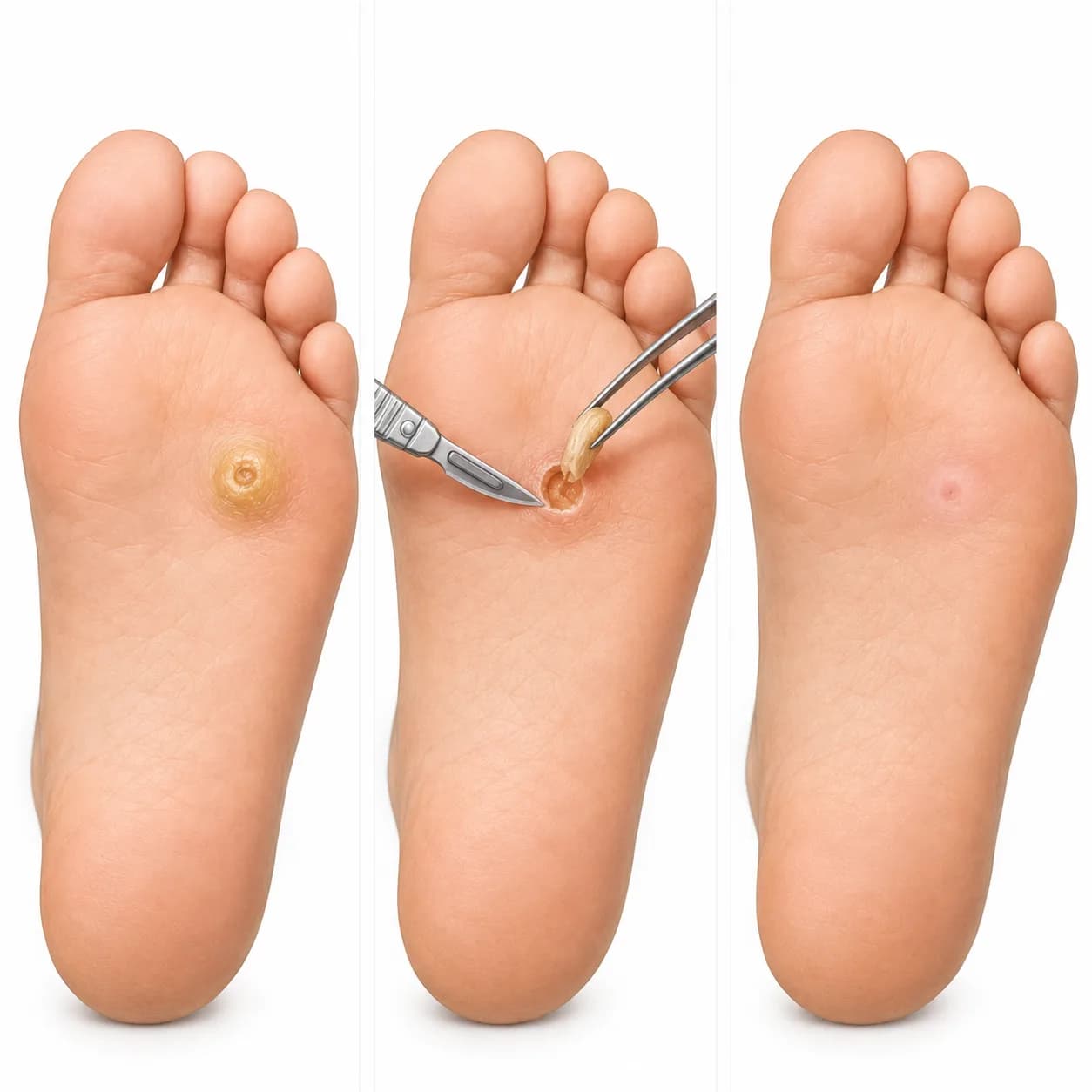
If the corn is painful or persistent, treatment may involve careful paring or removal of the thickened skin. When an underlying deformity or repeated pressure is contributing to recurrence, additional measures may be recommended to reduce mechanical stress on the affected area.
Patients with diabetes, poor circulation or other conditions that increase the risk of foot complications should be assessed medically rather than attempting to cut or remove a corn themselves.
Foot Corn Treatment
Pressure Relief
Removing the source of repeated pressure or friction is an important part of treatment. Well-fitting, cushioned footwear and appropriate pads or inserts can help reduce pressure on the affected area.
Corn Paring / Removal
A clinician can carefully pare or trim the thickened skin using appropriate instruments. This should not be attempted with a blade or other sharp instrument at home because of the risk of injury and infection.
Treatment of the Underlying Cause
When a foot deformity or recurring pressure point contributes to the corn, treatment may focus on correcting or reducing the mechanical cause to minimize recurrence.
Surgical Correction
In selected patients with persistent, painful corns caused by an underlying structural problem, surgery to address the source of abnormal pressure may be considered.
Recovery
Recovery depends on whether the procedure involves simple removal of thickened skin or correction of an underlying foot problem. Minor corn removal may require only a short period of local wound care, while structural procedures can require a longer recovery.
You will receive instructions regarding dressing care, footwear, activity and pressure protection. Addressing the cause of the corn is important to reduce the likelihood of recurrence.
Common questions
Common causes include tight or poorly fitting footwear, repeated friction and pressure, and foot deformities that create abnormal pressure points.
Corns are generally smaller and deeper and often have a hard central area, while calluses tend to be broader areas of thickened skin over pressure points.
They can be. Corns may become tender or painful, particularly when direct pressure is applied.
No. Mild corns may improve when the pressure or friction causing them is removed. Painful or persistent corns may benefit from professional treatment.
Corn excision refers to removal of the thickened corn tissue when it is clinically indicated. The exact technique depends on the location and cause of the lesion.
Yes. If the underlying pressure or friction remains, the corn can recur. Preventing recurrence therefore involves addressing footwear, pressure points and any relevant foot deformity.
Medical assessment is appropriate when the corn is very painful, repeatedly returns, becomes inflamed, bleeds, develops discharge, or interferes with walking. It is particularly important for people with diabetes or circulation problems.
Yes, other lesions can resemble a corn. Clinical examination can help distinguish a corn from conditions such as a wart.
Considering this procedure?
Book a consultation with Dr. Pitroda to discuss whether it's right for you.